5 min read · Updated 2026-07-30
Car Cover Size Guide: How to Measure Your Car for a Perfect Fit
Why "size" is about more than length
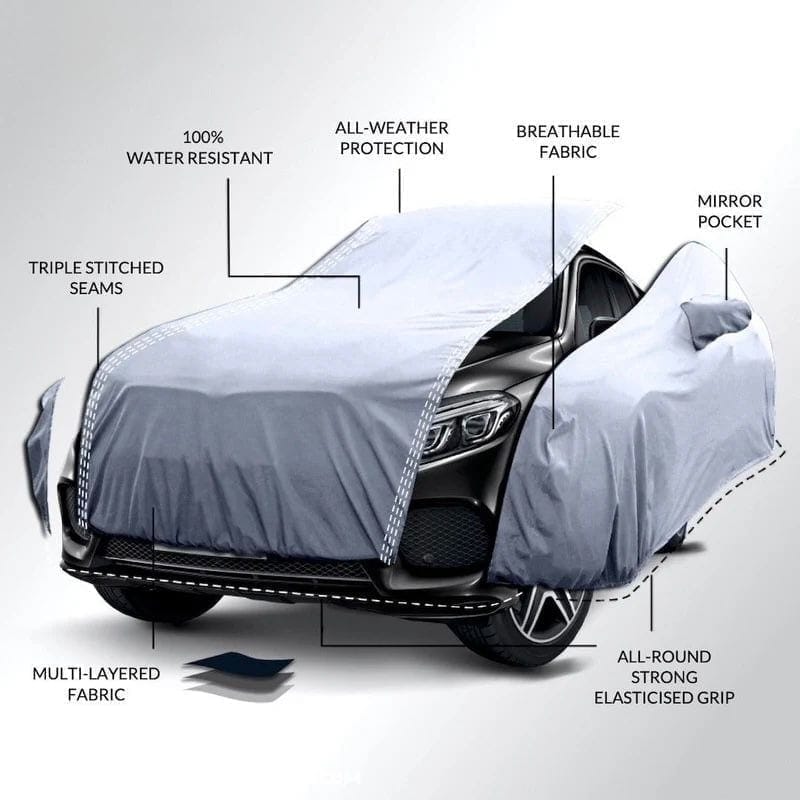
A car cover that's the right overall length but the wrong shape around the roofline, bonnet slope or boot will still sit loose in places. That's why brand- and model-specific sizing (rather than a generic "fits sedans" label) gives a noticeably better fit — the cover is cut to your car's actual silhouette, not just its length and width.
The three measurements that matter
- Overall length (front bumper to rear bumper) — determines the base size class (hatchback, sedan, SUV, etc.).
- Roof height — affects how much slack is built into the roof panel; too little and the cover strains at the mirrors, too much and it billows in wind.
- Mirror position — this is why buying by exact model matters more than by length alone; mirror pockets need to align or you'll get water ingress and flapping at the mirror cutouts.
How Covero sizing works
Instead of asking you to measure your car, Covero maps every cover to a specific brand, model and year using the fitment data behind each product page — select your vehicle on the product page and the correct size is applied automatically. This removes the guesswork (and the most common return reason: "cover was too loose/tight").
Common sizing mistakes to avoid
- Buying by "car type" (hatchback/sedan/SUV) instead of exact model — two hatchbacks can differ by 15–20cm in length.
- Ignoring facelifts — a pre-facelift and post-facelift version of the same model sometimes have different body dimensions.
- Not checking for roof rails or spoilers — some covers need a modified cut to clear these; check the product description if your car has either.